5 Ways to Stop Your Dog From Begging at the Table (That Actually Work)
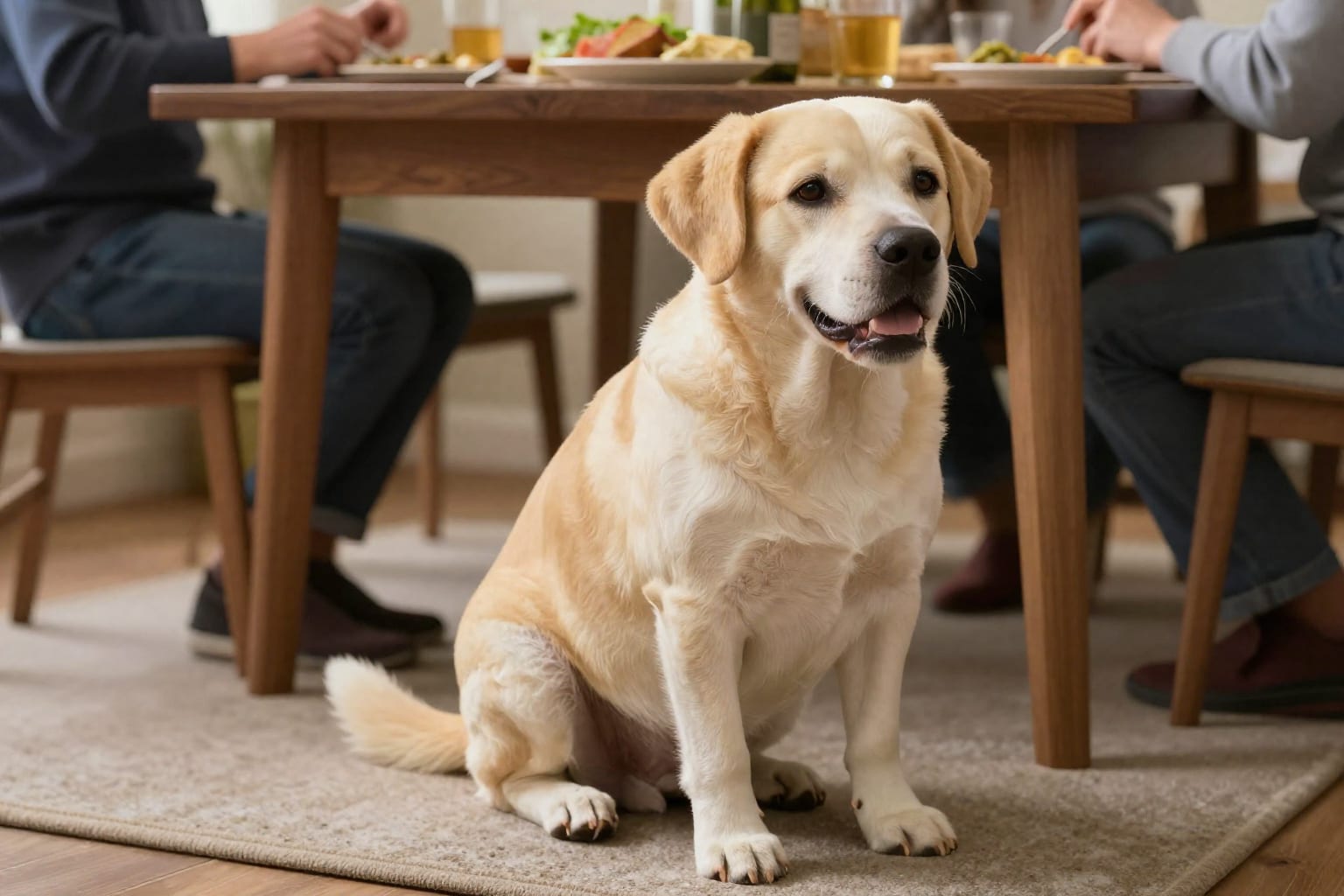
Introduction: Why Your Dog Begs and Why Scolding Doesn't Work
You know the scene: you sit down to a hot meal, fork halfway to your mouth, and suddenly there's a wet nose nudging your elbow, a chin resting on your thigh, and two pleading eyes locked on your plate like you're holding a Michelin-star steak. I've been there myself — my rescue, Gus, could make a single carrot sound like a gourmet treat with those eyes. But here's the thing: your dog isn't being stubborn or greedy. They're just a brilliant little scientist, and you've accidentally trained them.
Every time you've slipped a scrap under the table — even if it was just once, months ago — you taught your dog that begging pays off. Dogs repeat behaviors that earn rewards. Scolding, on the other hand, doesn't teach them what to do instead; it just confuses them and can backfire into anxiety or even more persistence. The good news? You can retrain the whole system in a way that's kind, clear, and actually works. Here are five strategies that stopped Gus cold — and they'll work for your dog too.
1. The 'Nothing in It for You' Strategy: Extinction with a Twist
This is the big one. The core trick to how to stop a dog from begging at the table is called extinction: you completely remove the reward (your attention, your food, your eye contact) that's been reinforcing the begging. But here's the twist that most guides miss — you can't just ignore the bad behavior; you must also reward a better alternative.
What You'll Need Before You Start
Grab a designated dog bed or mat (not their main sleeping bed — something portable), a small pouch of high-value treats (freeze-dried liver or cheese bits work well), and a healthy dose of patience. That's it.
Step-by-Step: How to Ignore and Redirect
- Pre-set the mat at least six feet from the table, where your dog can still see you but isn't underfoot.
- Before your meal, spend two minutes rewarding your dog for lying calmly on the mat. Toss a treat onto the mat every time they settle. Do this without saying a word — let the mat become a happy place.
- During your meal, absolutely zero eye contact, zero talking, zero food for the dog. If they leave the mat and nudge you, stay stone-faced. Don't push them away, don't say "no" — just pretend they're invisible.
- If they leave the mat, calmly stand up, walk them back to the mat without scolding, and return to your chair. Repeat as needed.
- After the meal (and only after), walk over and quietly drop a high-value treat on the mat. This rewards the calm stay — not the begging.
This method works because it breaks the cycle of unintentional training. Your dog learns that begging gets nothing, but lying quietly on the mat eventually earns a payoff.
The Extinction Burst Warning
Here's the hard part: when you first start ignoring, your dog will likely try harder. They'll whine, paw, bark, or stare more intensely. This is called an extinction burst — it's their last-ditch effort before they give up. If you cave even once, you reset the clock and teach them that persistence pays off. Stick with it for at least two weeks of consistent meals, and the burst will fade.
2. Teach a 'Go to Your Place' Cue (The Foundation for Peaceful Meals)
Once your dog understands the mat is a good place, you can add a verbal cue like "place" or "mat." This gives you a proactive tool: instead of reacting to begging, you can send your dog to their spot before the begging even starts.
How to Shape the Behavior (No Force Needed)
Start with no food on the table. Stand near the mat, hold a treat, and lure your dog onto it. The moment all four paws are on the mat, say "yes" or click, and give the treat. Repeat until your dog eagerly hops onto the mat. Then add the cue just before they step on. After a few reps, you can say "place" and wait for them to go on their own. Reward every success.
Increase Duration and Distance Gradually
Once they reliably go to the mat, ask for a sit or down, then reward. Gradually extend the time they stay — start with three seconds, then ten, then thirty. Next, take one step away from the mat and return to reward. Slowly increase distance until you can walk to the table and back. Then practice while you sit at the table with empty plates. Finally, add real food. This step-by-step proofing ensures your dog doesn't associate the cue only with treats — they learn to stay through the whole meal.
3. Manage the Environment: Physical Barriers and Pre-Meal Exercise
Sometimes training takes time, and you need an immediate fix. That's where management comes in. You don't have to fight the behavior head-on every single meal.
The Pre-Meal Tired Dog Trick
A tired dog is a calm dog. About 30 minutes before dinner, take your dog for a brisk 15-minute walk or a five-minute game of fetch. This burns off excess energy and lowers their overall arousal level, making them less likely to pester you for food.
Use a Crate or Baby Gate Strategically
Set up your dog's crate or a gated area in the same room as the dinner table — not banished to another room, but within sight. Give them a stuffed Kong (frozen with peanut butter or wet food) or a long-lasting chew. This keeps them occupied, satisfied, and part of the family without access to your plate. I used this with Gus during holiday dinners when relatives were around; it saved my sanity and his training progress.
4. The 'Nothing from the Table' Household Rule (Involve Everyone)
This is the hidden reason why many owners fail: mixed signals. If you ignore your dog but your partner sneaks a piece of chicken, or your toddler drops a meatball, the behavior persists. You need a unified front.
How to Explain the Rule to Guests
Before guests arrive, say, "Please don't feed the dog from the table — we're training him to stop begging." Most people will comply. If you're worried they'll forget, put a small sign on the table: "Training in progress — no table scraps, please." It feels awkward, but it works.
What About Kids?
Kids are natural droppers. Teach them the rule in a simple way: "If you drop food, say 'Oops' and leave it — don't pick it up for the dog." Supervise younger children during meals, and consider feeding the dog in their crate while kids eat until the habit is solid.
5. Feed Your Dog at the Same Time (But NOT from the Table)
One of the simplest fixes: give your dog their own meal in their own spot while you eat. If their stomach is full, they're far less interested in your food. But timing matters — feed them before you sit down, not after, so they don't associate your meal with their own.
Make Their Meal More Engaging
Instead of dumping kibble in a bowl, use a puzzle feeder, a snuffle mat, or a stuffed Kong. This slows down eating, adds mental stimulation, and keeps your dog busy for 15–30 minutes — the entire length of your meal. I rotate three different puzzle toys for Gus, and he now gets excited about his own dinner instead of mine.
Conclusion: Patience and Consistency Pay Off
No single method is magic. What works is picking one strategy — I'd suggest starting with the 'nothing in it for you' extinction protocol — and sticking with it for at least two weeks. Celebrate small wins: a meal where your dog only whined once, a day where they went to their mat on their own. If you slip, just start fresh the next meal. Your dog isn't trying to drive you crazy; they're just following the rules you've accidentally taught them. Rewrite those rules with kindness and consistency, and you'll both enjoy dinner again.
Practical takeaway: Tonight, before you sit down, set up a mat six feet from the table and spend two minutes rewarding your dog for lying on it. Then eat your meal in silence — no eye contact, no food, no scolding. After you finish, reward the mat one last time. Repeat for two weeks. That's it.